
Cyprus Hard Water Guide
Cyprus Hard Water & Limescale Solutions
Hard water in Cyprus is one of the most common reasons homes and businesses see limescale on taps, shower glass, kettles, boilers, solar heaters, washing machines, dishwashers and coffee equipment. This guide explains the signs, causes and best water softener solutions so you can choose the right system based on real water conditions.
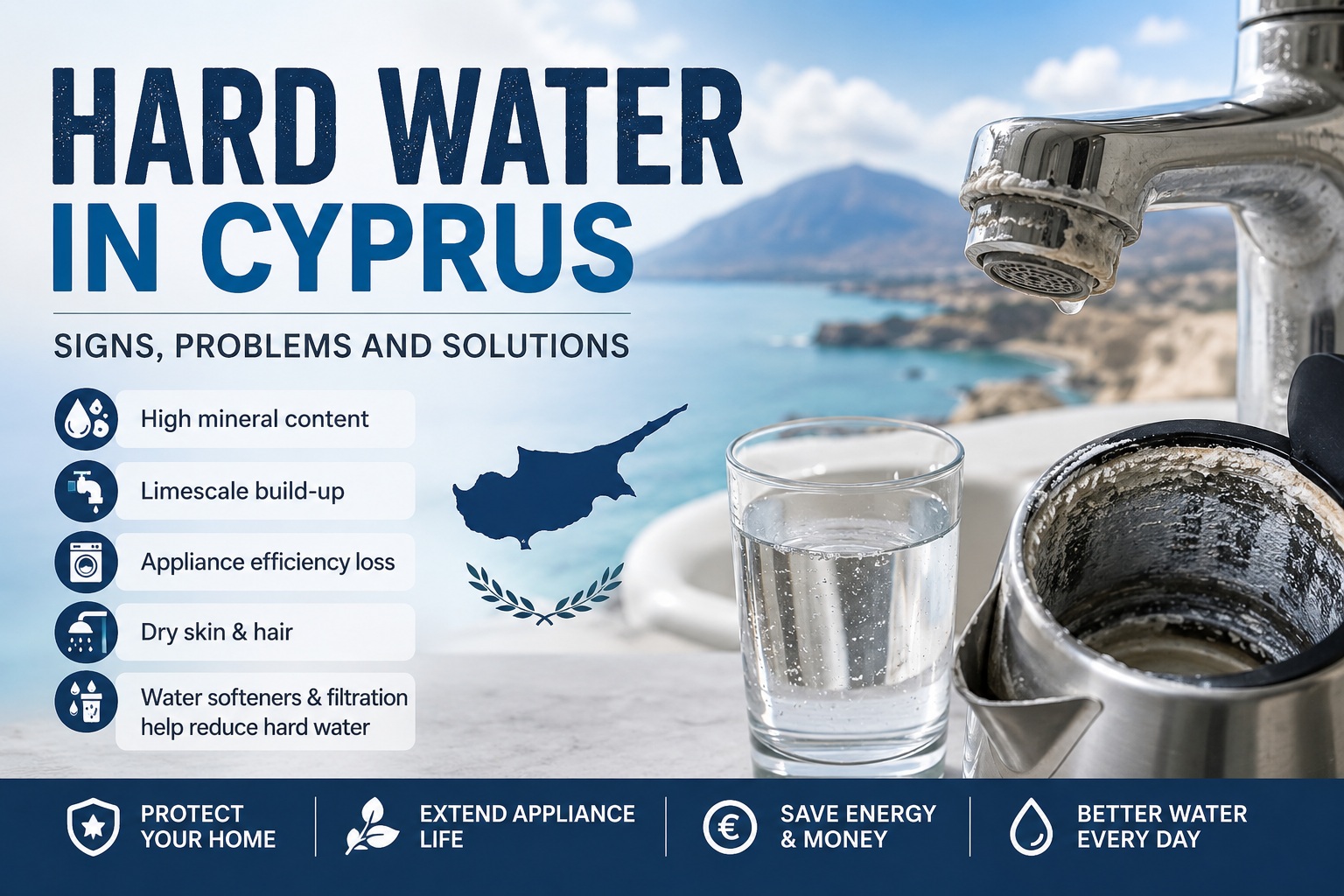
Is Water in Cyprus Hard?
Yes. Many areas in Cyprus experience moderate to hard water because of mineral content, local geology, water supply mix, storage tanks and property plumbing conditions. Hard water is usually not the same as unsafe water. It is mainly a practical problem that causes limescale, white marks, reduced appliance efficiency, blocked fixtures and extra cleaning around the home or business.
Related Water Quality Guide
Hard Water Is Just One Water Problem Found in Cyprus
Hard water is one of the most common water quality issues in Cyprus, but it is not the only one. Homeowners and businesses may also experience chlorine taste, limescale deposits, salty water, unpleasant odours, sediment, storage tank contamination and other water-related problems depending on the area, water source and property conditions.
If you want a complete overview of the most common water quality issues, causes and treatment options available across Cyprus, see our comprehensive guide below.
Why Is Water Hard in Cyprus?
Cyprus water hardness is mainly linked to dissolved minerals, especially calcium and magnesium. As water passes through limestone-rich rock, mineral-heavy layers and local supply networks, it can collect minerals before reaching homes and businesses.
Cyprus also uses a mix of water sources, including municipal supply, desalinated water, storage tanks and in some cases borehole water. This is why water hardness can vary between districts, villages, buildings and even neighbouring properties.
For official drinking-water information, you can review the
Cyprus drinking-water quality control results
and information from the
Cyprus Water Development Department
.
Common Signs of Hard Water in Cyprus
Hard water problems often develop gradually. Many people do not realise how much hard water affects their property until limescale becomes visible or appliances start losing efficiency.
Limescale Build-Up
White deposits often appear around taps, showerheads, kettles, bathroom surfaces and boilers.
Poor Soap Lather
Hard water can reduce soap and shampoo lather, making cleaning less effective and leaving residue behind.
Appliance Scale
Scale deposits inside boilers, kettles, washing machines, dishwashers and coffee machines can reduce efficiency.
Dry Skin or Hair
Some people notice dry skin or dry hair when washing regularly with hard water, especially in areas with high mineral levels.
How Hard Water Affects Homes and Businesses
Hard water does not only leave visible marks around taps and kettles. Over time, mineral build-up can affect plumbing efficiency, boilers, solar heaters and water-using appliances throughout the property.
Boilers & Solar Heaters
Limescale build-up inside heating systems can reduce efficiency and increase maintenance requirements over time.
Washing Machines & Dishwashers
Hard water minerals may shorten appliance lifespan and leave white residue on dishes and glassware.
Coffee Machines
Espresso machines, kettles and ice machines are especially sensitive to limescale and often need additional protection.
Daily Water Comfort
Many homeowners notice easier cleaning, less visible scale and better everyday water comfort after installing the correct system.
How Water Softener Systems Work
A water softener system treats hard water before it reaches your taps, showers, boiler and appliances. The goal is to reduce the calcium and magnesium minerals responsible for limescale build-up and hard water problems.
In Cyprus, a correctly sized salt-based water softener is usually the strongest long-term solution for serious whole-property limescale problems. It is normally installed on the main supply line, so softened water can protect showers, taps, boilers, washing machines, dishwashers and other equipment.
For drinking water taste and TDS reduction, many homes combine a water softener with a
reverse osmosis system
.
The Basic Softening Process
- Hard water enters the system from the main supply.
- Hardness minerals are reduced through the softening process.
- Softened water flows through the property to taps, showers and appliances.
- The system regenerates automatically to maintain performance.
Important: The correct system size depends on hardness, TDS, property size, people in the home, water usage and installation conditions.
Types of Hard Water Solutions in Cyprus
Not all hard water systems work the same way. For Cyprus hard water, salt-based softeners are usually the correct long-term solution for whole-property limescale protection, while salt-free descalers and reverse osmosis systems serve different purposes.
MOST RECOMMENDED
Salt-Based Water Softeners
The strongest long-term option for serious hard water and heavy limescale problems in Cyprus.
- Whole-house hard water treatment
- Strong limescale reduction
- Helps protect boilers and solar heaters
- Helps extend appliance lifespan
- Suitable for homes, villas, hotels and cafés
LIGHTER PROTECTION
Salt-Free Descalers
Designed to help reduce scale formation without fully removing hardness minerals from the water.
- No salt regeneration
- Can help reduce scale build-up
- Useful for lighter applications
- Not equal to full water softening
For severe Cyprus hard water, a true salt-based softener is usually stronger.
DRINKING WATER
Reverse Osmosis Systems
Designed mainly for drinking water purification, taste improvement and TDS reduction.
- Excellent drinking water quality
- Helps reduce TDS levels
- Improves taste and smell
- Popular for kitchens, cafés and offices
Often combined with a softener for complete home water treatment.
Comparing Hard Water Solutions in Cyprus
Choosing the right hard water treatment system depends on how severe the water hardness is and what level of protection you need for your property.
| Feature | Salt-Based Water Softener | Salt-Free Descaler | Reverse Osmosis |
|---|---|---|---|
| Main Purpose | Whole-house hard water treatment | Lighter anti-scale protection | Drinking water purification |
| Reduces Hardness Minerals | Yes, designed for this purpose | No, normally conditions minerals rather than removing them | Yes, but mainly at one drinking-water tap |
| Best for Heavy Limescale | Excellent option | Limited compared with a full softener | Not designed for whole-house limescale |
| Protects Whole Property | Yes, when installed on the main supply | Partially, depending on the system and water conditions | No, usually drinking water only |
| Best Use in Cyprus | Homes, villas, hotels, cafés and properties with serious scale | Light scale situations or lower-maintenance preference | Drinking water, cooking, coffee, tea and bottled water replacement |
How to Choose the Right Water Softener Size in Cyprus
Choosing the correct water softener size is important. A system that is too small may regenerate too often and struggle with heavy water use. A system that is too large may cost more than necessary. The right size depends on water hardness, people in the property, bathrooms, appliances, water source and daily use.
Main Factors We Check Before Recommending a System
Water Hardness
Harder water needs a system with enough capacity to handle calcium and magnesium levels.
People in the Home
More people usually means higher daily water usage, especially for showers, laundry and cleaning.
Bathrooms & Appliances
Homes with several bathrooms, boilers, dishwashers and washing machines may need a larger system.
Water Source
Mains water, tank water and borehole water may require different treatment planning.
| Property Type | Typical Use | Suggested System Type |
|---|---|---|
| Apartment | 1–3 people, lower water use, limited installation space | Compact salt-based water softener or targeted solution |
| Family Home | 3–5 people, daily showers, washing machine, dishwasher | Properly sized whole-house salt-based water softener |
| Villa / Large House | Multiple bathrooms, high demand, guest use | Larger capacity salt-based softener |
| Café / Restaurant | Coffee machines, dishwashers, ice machines, high daily use | Commercial water softener plus drinking water filtration if needed |
| Hotel / Airbnb | Guest showers, laundry, boilers, high seasonal use | Commercial or high-capacity whole-property system |
| Borehole Property | Variable water quality depending on the source | Water testing first, then customised treatment plan |
Hard Water Conditions Across Cyprus
Water hardness can vary across Cyprus depending on the local supply, storage tanks, desalinated water mix, borehole use, seasonal demand and building plumbing. This is why a local water test is more reliable than choosing a system only by property size or city name.
Nicosia
Many homes in Nicosia experience visible limescale around taps, kettles, boilers and shower glass.
Limassol
Water conditions in Limassol can vary depending on area, water supply mix and building storage systems.
Larnaca
Homes and businesses in Larnaca may experience hard water, chlorine taste and mineral deposits depending on storage and local supply.
Paphos
Water hardness in Paphos can differ between areas and properties, especially where different water sources or storage systems are used.
Ayia Napa & Protaras
Hotels, villas and tourist properties often need stronger limescale protection because of high seasonal water usage.
Borehole Water
Borehole water may contain higher hardness, TDS or additional minerals. Water testing is strongly recommended before selecting a system.
Recommended Water Treatment Setups for Cyprus
The best water treatment setup depends on the hardness level, property size and the specific problems you want to solve. Many Cyprus homes combine whole-house hard water treatment with dedicated drinking water filtration for better overall water quality.
Reverse Osmosis Drinking Water Systems
Reverse osmosis systems are commonly used for drinking water purification in kitchens, cafés and offices. They help improve taste while reducing dissolved solids and chlorine.
- Excellent drinking water quality
- Helps reduce TDS levels
- Improves taste and smell
- Popular alternative to bottled water
- Suitable for homes and businesses
Many customers combine reverse osmosis with a whole-house water softener for complete water treatment.
Commercial Water Softener Systems
Hotels, restaurants, cafés and commercial properties often need larger-capacity systems because of high daily water usage and heavy limescale exposure.
- Protects commercial equipment
- Helps reduce maintenance costs
- Suitable for coffee machines and boilers
- Designed for higher water demand
- Professional installation available
Related Water Filtration Solutions
Hard water is only one part of water quality. Depending on your water test results, you may also need drinking water filtration, main supply filtration, water measuring tools or appliance protection.
Main Supply Filters
For whole-property filtration and water entry-point protection.
Water Softener and Hard Water Services Across Cyprus
WaterFilterNet.com helps homes and businesses choose water filtration and water softener systems across Nicosia, Limassol, Larnaca, Paphos, Famagusta, Ayia Napa, Protaras, Paralimni and surrounding villages.
We support homeowners, apartments, villas, cafés, restaurants, offices, hotels, Airbnb properties and commercial spaces with water testing, system recommendations, installation support and replacement filter advice.
Frequently Asked Questions About Hard Water in Cyprus
Below are some of the most common questions homeowners and businesses ask about hard water, limescale and water softener systems in Cyprus.
Is water in Cyprus considered hard?
Many areas in Cyprus experience moderate to hard water. The exact level can vary by city, property, supply mix, storage tank condition and water source. A hardness and TDS test is the most practical way to understand your own property.
Is hard water dangerous to drink?
Hard water is usually not treated as a safety problem by itself. It is mainly a practical issue linked to limescale, taste, cleaning, appliance protection and plumbing. Drinking-water safety should be assessed using official water quality information and proper water testing.
Is hard water the only water problem in Cyprus?
No. Cyprus properties may also experience chlorine taste, sediment, rooftop tank contamination, high TDS, salty water and other water quality concerns. For a complete overview of common water issues, causes and treatment options, see our Water Problems Cyprus guide.
What is the best solution for limescale in Cyprus?
For serious whole-house limescale problems, a properly sized salt-based water softener is usually the strongest long-term solution. For drinking water taste and TDS reduction, many homes also install reverse osmosis at the kitchen tap.
Does reverse osmosis remove hard water minerals?
Reverse osmosis can reduce dissolved minerals in drinking water, but it is normally installed for one drinking-water tap, not for the whole property. It does not replace a whole-house softener when the goal is to protect showers, boilers and appliances.
Are salt-based water softeners better than salt-free descalers?
For heavy hard water and visible limescale, salt-based softeners are usually stronger because they are designed to reduce hardness minerals. Salt-free descalers may help in lighter situations, but they do not fully soften water in the same way.
Can water softeners be installed in apartments?
Yes. Compact water softener systems can often be installed in apartments depending on the available space, plumbing setup, water usage and hardness level. A site check or water test helps confirm the best option.
Can water softeners help cafés and restaurants?
Yes. Cafés and restaurants often install water softeners to help protect espresso machines, boilers, dishwashers and ice machines from limescale damage and maintenance problems.
Should I test my water before buying a system?
Yes. Testing helps avoid buying the wrong system. Hardness, TDS, water source, property size and daily use should all be considered before choosing a water softener, reverse osmosis system or main supply filter.
Expert Note from WaterFilterNet.com
WaterFilterNet.com helps Cyprus homes and businesses choose water filtration, reverse osmosis, water softener, main supply filtration and water testing solutions. Recommendations should be based on local water conditions, practical installation needs and property-specific water test results.
Cyprus Water Softener Specialists
Choose the Right Water Softener System for Your Property
For most serious hard water and limescale problems in Cyprus, a properly sized salt-based water softener is the strongest long-term solution. The safest way to choose the right system is to test your water first.
Serving Nicosia, Limassol, Larnaca, Paphos, Famagusta, Ayia Napa, Protaras, Paralimni and surrounding areas.