Water Hardness Guide
What Is Hard Water?
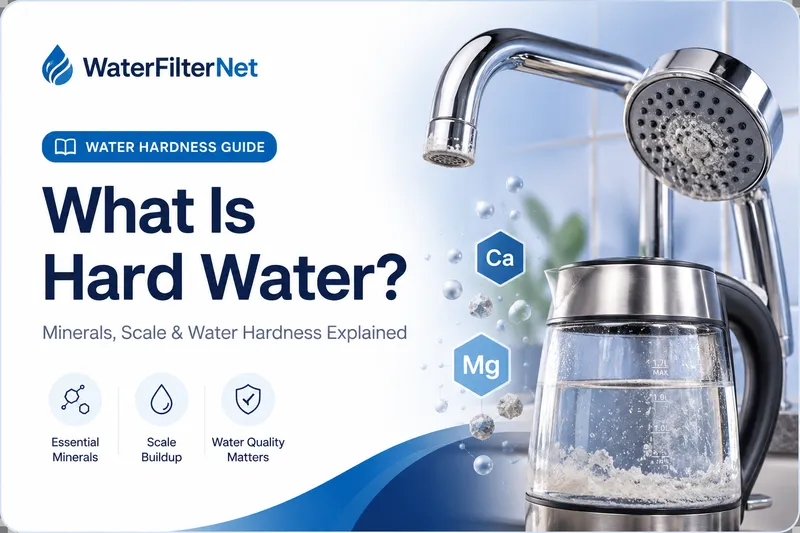
Hard water is water that contains higher levels of dissolved minerals, mainly calcium and magnesium. These minerals are naturally picked up as water passes through rock, soil and underground layers. Hard water is common in many places and is usually noticed because it leaves scale, white marks, kettle deposits and soap residue.
Quick Answer: What Does Hard Water Mean?
Hard water means the water contains dissolved hardness minerals, mainly calcium and magnesium. The higher the mineral concentration, the harder the water. Hard water is not automatically unsafe, but it can cause limescale, cloudy marks, reduced soap performance and mineral deposits inside kettles, boilers, pipes and appliances.
Living in Cyprus?
This article explains hard water in general. If you want local advice about limescale, water softeners, apartments, villas, cafés, hotels and the best treatment options for Cyprus water conditions, read our full
Hard Water in Cyprus guide
.
What Minerals Cause Hard Water?
The main minerals responsible for hard water are calcium and magnesium. These minerals dissolve naturally into water as it moves through limestone, chalk, gypsum and other mineral-rich ground layers.
When water contains more of these minerals, it becomes harder. When the water is heated or evaporates, the minerals can remain behind as white deposits. This is why kettles, boilers, taps and showerheads often show scale before other parts of the home.
The amount of hardness minerals can vary greatly depending on local geology, water source and plumbing conditions. That is why testing is more reliable than guessing from appearance alone.
Main Hardness Minerals
- Calcium: the most common cause of white scale deposits.
- Magnesium: contributes to hardness and soap residue.
- Carbonates: often involved in temporary hardness and kettle scale.
- Mineral salts: can affect total dissolved solids and taste.
Temporary vs Permanent Water Hardness
Hardness is often described as temporary or permanent. The difference matters because some hardness reacts strongly when water is heated, while other dissolved minerals remain in the water even after boiling.
Temporary Hardness
Temporary hardness is mainly caused by bicarbonate minerals. When water is heated, these minerals can form visible scale. This is why kettles, boilers and hot-water systems often show limescale build-up.
Permanent Hardness
Permanent hardness is linked to dissolved minerals that do not disappear simply by boiling the water. These minerals may still affect soap performance, taste and total mineral content.
How Is Water Hardness Measured?
Water hardness can be measured in several ways. The most common units are milligrams per litre as calcium carbonate, parts per million, grains per gallon, or German degrees. A water hardness test helps identify whether your water is soft, moderately hard, hard or very hard.
| Measurement Unit | Meaning | Common Use |
|---|---|---|
| mg/L as CaCO₃ | Milligrams per litre expressed as calcium carbonate | Water testing reports and technical specifications |
| PPM | Parts per million, often similar numerically to mg/L | Simple water quality discussions and meters |
| GPG | Grains per gallon | Common in softener sizing and hardness charts |
| °dH | German degrees of hardness | Used in parts of Europe and some appliance manuals |
Hard Water vs Soft Water
The main difference between hard water and soft water is the amount of dissolved hardness minerals. Hard water contains more calcium and magnesium. Soft water contains fewer hardness minerals and usually creates less scale and better soap lather.
| Feature | Hard Water | Soft Water |
|---|---|---|
| Mineral Content | Higher calcium and magnesium | Lower hardness minerals |
| Limescale | More likely to leave white deposits | Less likely to create scale |
| Soap Lather | Can reduce lather and leave residue | Usually lathers more easily |
| Appliances | May cause scale in heating elements | Less scale-related stress |
Common Signs of Hard Water
Hard water signs usually appear where water is heated, evaporates or mixes with soap. These signs are useful clues, but a hardness test is still the best way to confirm the actual level.
White Scale Marks
White deposits around taps, kettles, showerheads and sinks are one of the clearest signs of hard water.
Cloudy Glassware
Glasses and dishes may look cloudy or spotted after washing when mineral residue is left behind.
Poor Soap Lather
Hardness minerals can react with soap, making it harder to create lather and easier to leave residue.
Appliance Scale
Kettles, boilers, dishwashers and washing machines can collect mineral deposits over time.
How to Test Water Hardness
The easiest way to understand hard water is to test it. A basic hardness test can show whether water is soft, moderately hard, hard or very hard. For a more complete picture, it is useful to check TDS as well, especially before choosing a filtration or softening solution.
You can use test strips, liquid drop tests, water meters or a professional water test. For homes and businesses in Cyprus, WaterFilterNet.com offers free hardness and TDS testing to help choose the right next step.
Testing Options
- Hardness test strips: quick and simple home check.
- Drop test kits: more detailed hardness result.
- TDS meters: measure total dissolved solids, not hardness alone.
- Professional testing: best before choosing a system.
Cyprus Local Guide
Need Cyprus-Specific Hard Water Advice?
If you want to understand hard water problems specifically in Cyprus, including limescale, apartments, villas, cafés, hotels, borehole water, reverse osmosis and water softener options, use the full local guide.
Frequently Asked Questions About Hard Water
These answers explain the basic concept of hard water. For local treatment recommendations in Cyprus, use the full hard water guide or request a water test.
Is hard water unsafe?
Hard water is not automatically unsafe. It usually refers to mineral content rather than contamination. However, hard water can create practical problems such as scale, cloudy marks, soap residue and appliance deposits.
Why does my kettle get white deposits?
White deposits inside a kettle are usually mineral scale left behind when hard water is heated. Calcium carbonate is a common cause of this visible limescale.
Does boiling water remove hardness?
Boiling can reduce some temporary hardness, but it does not fully remove all dissolved minerals. It can also leave concentrated scale behind inside kettles and hot-water equipment.
Can a TDS meter measure water hardness?
A TDS meter measures total dissolved solids, not hardness alone. It can be useful, but a hardness-specific test is better for measuring calcium and magnesium hardness.
What is the best way to confirm hard water?
The best way is to test the water using a hardness test strip, liquid test kit or professional water test. Visible scale is a clue, but testing gives a clearer result.
WaterFilterNet.com
Check Your Water Before Choosing a Solution
Hardness, TDS and water source can affect which solution is right for your home or business. Testing first helps avoid choosing the wrong system.
Serving homes and businesses across Cyprus with water testing, filtration and treatment advice.

Stavros is a professional water quality specialist and holds an extensive knowledge of various water filtration technologies, including reverse osmosis, water softeners, water purification systems and additional water treatment techniques for residential and commercial use. He has written extensively on the subject of water filtration and treatment, with his work appearing in industry publications such as Water Technology and Water Quality Products.
In addition to his professional work, Stavros supports the environmental sustainability and is committed to promoting eco-friendly water filtration solutions. He believes that everyone has to have access to clean, safe drinking water and is dedicated to helping people achieve this goal.
Stavros resides in Larnaca Cyprus with his family and enjoys sailing. He can be reached at tel: +357 99626069 and is available to provide expert advice on all aspects of water filtration systems, including installation, maintenance, and replacement filters.
- How to Use SodaStream Duo – Step by Step Guide - June 30, 2026
- 12 Easy Homemade SodaStream Recipes & Natural Soda Syrups - June 25, 2026
- Tankless Reverse Osmosis Systems Cyprus: Tankless vs Traditional RO Tanks - June 8, 2026